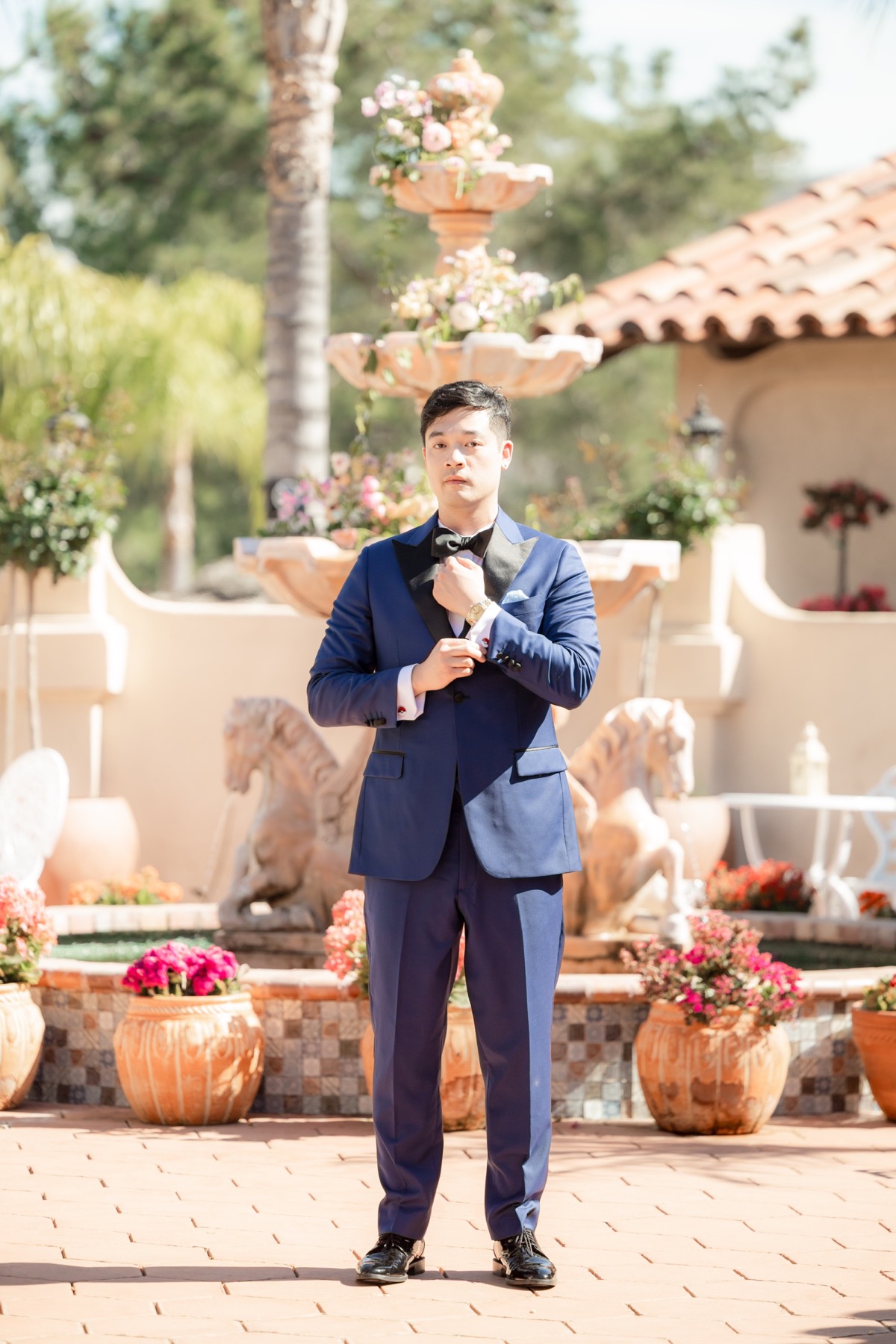
The one real difference: satin
Strip away the mystique and a tuxedo is defined by three things, all of them satin. Satin on the lapels. Satin-covered buttons. A satin stripe down the outside of each trouser leg. That's it. That's the tuxedo.
But that satin is doing real work. Satin catches light, and catching light is what formality looks like after dark. A tuxedo isn't "fancier" because of some old rule — it's built to be seen in the evening, under candlelight and chandeliers and camera flash. The satin is the formality.
A suit has none of it. A suit is fabric through and through — the lapel is the same wool as the chest, the buttons are horn or corozo, the trouser leg is plain. And that's exactly its strength: a suit isn't tied to one kind of event. The same garment that marries you can take you to a dinner, a closing, an anniversary. You will actually wear it again.
So which one for your wedding?
Read the invitation, then read the clock. The decision is almost always made for you:
- Evening, ballroom, or "black tie" on the invitation — tuxedo. If the celebration happens after dark in a formal room, satin is the right language.
- Daytime, garden, vineyard, and nearly everything else — suit. Satin in afternoon sun looks like it wandered in from a different party.
If your wedding sits somewhere between — a ceremony at five, a reception that runs past midnight — the venue usually breaks the tie. A formal hotel ballroom leans tux. A restaurant, loft, or backyard leans suit. And if you're still torn, that's a fine question to bring to a consultation; deciding this is part of the job.
One upgrade most grooms miss: midnight blue
If you do land on a tuxedo, don't default to black without thinking. Under evening light, true black tends to go flat — it swallows detail and reads as a silhouette in photos. Midnight blue does the opposite. It reads richer and deeper than black after dark, which is why old-school formalwear makers and modern photographers both quietly prefer it. Your eye says "black, but better." Your photos will agree.
We go deeper on color in the navy vs. black guide — including the pattern rule that keeps grooms from accidentally dressing for the office.
The re-wear question
Here's the honest trade. A tuxedo is a specialist: it only belongs at formal evening events, so most men wear theirs a few times in a decade. A custom suit is a generalist: cut for your body, it goes back into rotation the week after the honeymoon. Neither answer is wrong — but if the invitation doesn't demand satin, the suit gives you a garment with a life beyond one day.
Whichever way you go, start the clock early. Custom takes time, and the comfortable window is wider than most grooms think — the full schedule is in our wedding suit timeline.
Quick answers
What's the actual difference between a suit and a tuxedo?
Satin — on the lapels, the buttons, and down the trouser leg. A tuxedo has it; a suit is fabric through and through. The satin is what makes a tux formal.
Suit or tuxedo for my wedding?
Evening, ballroom, or "black tie" on the invitation: tuxedo. Daytime, garden, and nearly everything else: suit.
Will I wear a tuxedo again?
Probably a handful of times — it only belongs at formal evening events. A suit goes back into regular rotation, which is the strongest practical argument for one.
Black tux or midnight blue?
Midnight blue, more often than not. It reads richer than black under evening light and photographs with more depth.
Still deciding? Let the planner take a pass.
Tell it your venue, your date, and your time of day — it builds a direction in two minutes, suit or tux included.
Plan Your Wedding Look